The idea
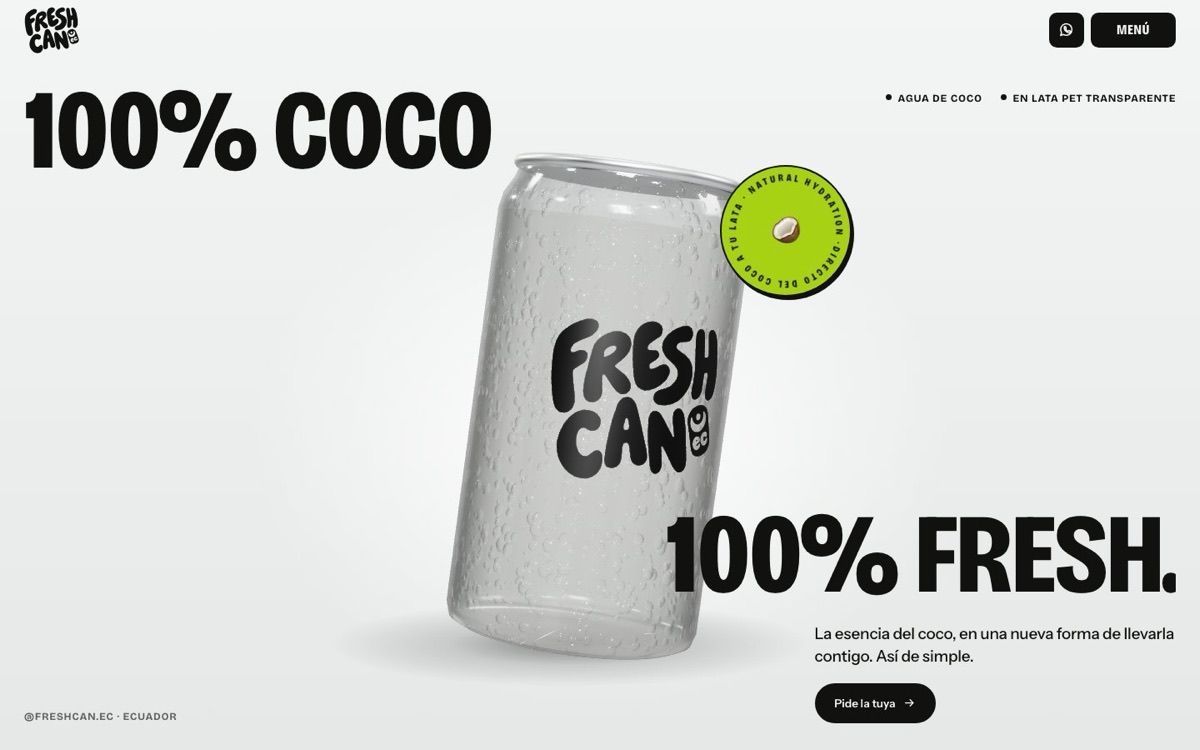
Fresh Can sells 100% coconut water in transparent PET cans in Ecuador. The can is the product’s defining feature (the coconut water itself is the colour), so the site is built around transparency and liquid. Its creative line, “Lo que ves es lo que tomas” (what you see is what you drink), comes from the clear can rather than from the brand.
This is a speculative concept build: it wasn’t commissioned by Fresh Can, and the brand’s photography comes from its public Instagram, with each source post recorded.
The experience
- Loader: a counter runs from 000 to 330 ml while an outline can fills, then exits with a can-shaped column wipe (first visit per session only).
- Hero: “100% coco / 100% fresh.” split around the 3D can.
- Pinned scene: the can drains over a photo of coconuts, then refills, with an ml counter and badges that show verified facts only.
- Formats: 250, 330 and 500 ml cards sharing one WebGL canvas; ”+” opens an order popover that composes a WhatsApp message.
- Ruta Fresh: one confirmed retailer plus unconfirmed “spots”, with a carousel where the can morphs between sizes.
- Footer: revealed beneath the page, with a small coconut-slicing game.
Engineering decisions
A procedural model. The can is built in code from a lathe profile at the proportions of a standard 330 ml can (66 × 122 mm); other formats scale the body. The liquid level is a single parameter, which makes scroll-linked draining trivial and avoids shipping a model file.
One WebGL context. The format cards render through one shared canvas with multiple slots, because mobile browsers limit WebGL contexts and every extra renderer costs memory.
One animation loop. Motion modules share a single requestAnimationFrame runtime (with Lenis for smooth scrolling); timings live in one config file and the can choreography is pure maths, which makes it unit-testable.
Ordering without a backend. With no prices, delivery areas or email confirmed, a cart would have meant inventing them. A WhatsApp order message, built from the visitor’s selection and sent to the number in the brand’s Instagram bio, matches how the brand already sells.
Before it could launch
The project’s README lists what a real launch would need from the brand: prices, delivery areas and an email; original images with confirmed usage rights; a vector logo; and the production domain.